


Dr. Jenna Coalson
Member, Scientific Advisory Board
Dr. Jenna Coalson, PhD, MPH is an epidemiologist specializing in the transmission dynamics of vector-borne diseases. She joined The Carter Center’s River Blindness, Lymphatic Filariasis, and Schistosomiasis Programs in 2021, where she provides technical support for study design, data collection, data management, and statistical analyses across program activities in Ethiopia, Nigeria, Uganda, and Sudan. Her research emphasizes cross-disciplinary collaborations to identify infectious disease reservoirs and develop efficient strategies for reducing disease burden.
Dr. Coalson’s work integrates clinical perspectives on disease burden with laboratory methods, geospatial and ecological techniques, and field surveys on community perceptions and behaviors. Over more than a decade in epidemiology, she has contributed to research spanning cancer and chronic diseases, occupational safety, and pharmacoepidemiology, alongside extensive field experience in the United States and sub-Saharan Africa. She is particularly committed to interdisciplinary scientific collaboration as a means of addressing complex global health challenges.
Before joining The Carter Center, Dr. Coalson served as an Assistant Professor of Practice in the Eck Institute for Global Health at the University of Notre Dame. She received her PhD in epidemiological methods and her MPH in international health epidemiology from the University of Michigan School of Public Health and earned her BA in human biology from Stanford University, concentrating on the biological and social dimensions of infectious disease.

Dr. Giulio De Leo
Member, Scientific Advisory Board
Dr. Giulio De Leo, PhD is a theoretical ecologist whose work sits at the intersection of human health, environmental change, and disease ecology. He is Professor of Earth System Science and of Oceans at Stanford University’s Doerr School of Sustainability, and a Senior Fellow at the Woods Institute for the Environment. He also serves as Co Director of the Stanford Program Disease Ecology in a Changing World (DECO), and Co Chair of the Engineering Working Group of the Global Schistosomiasis Alliance. His additional affiliations include the Center for Innovation in Global Health, BIO X, the Stanford King Center for Global Development, and the Stanford Center for Human and Planetary Health.
Dr. De Leo’s research integrates field studies, epidemiological data, and mathematical and computational modeling to identify first principles in the ecology of infectious diseases and to evaluate environmental and public health interventions. His work focuses on environmentally mediated diseases, especially schistosomiasis, and on understanding how ecological, climatic, and anthropogenic drivers shape disease transmission. Over the past decade, he has led major research programs in West Africa and Brazil, advancing ecological solutions that simultaneously improve human health and protect ecosystems.
He has authored more than 250 publications, including over 150 peer reviewed papers, with support from the Bill & Melinda Gates Foundation, NIH, and NSF. His recent Nature paper (Rohr, De Leo et al., 2023) received the 2024 Frontier Planetary Prize and the 2024 Ecological Society of America Sustainability Award, recognizing his team’s pioneering work on “wealth generating ecological solutions” for disease control.
Dr. De Leo’s career exemplifies the integration of ecological science with actionable, community centered public health strategies, making him an invaluable advisor to organizations working on neglected tropical diseases.

Dr. Charles Mackenzie
Member, Scientific Advisory Board
Dr. Charles Mackenzie, PhD, DVSc is an Australian pathologist whose career spans basic research, diagnostic pathology, and extensive fieldwork in tropical medicine across Africa, Asia, and South America. After a research appointment at the National Medical Research Council laboratories in London, he led the Tropical Pathology Section at the London School of Hygiene and Tropical Medicine before moving to the United States to serve as Chair of the Department of Pathology in the College of Human Medicine at Michigan State University.
Dr. Mackenzie has spent many years working in Cameroon, Sudan, and Tanzania, where he helped define the clinical manifestations of onchocerciasis and lymphatic filariasis and contributed to improved treatments for these infections. In 1999, while seconded to the Mectizan Donation Program in Atlanta, he collaborated with multiple African countries to establish national lymphatic filariasis elimination programs. He continued this work with the Tanzanian Ministry of Health, helping to build and support the country’s National Lymphatic Filariasis Program, the first in Africa to distribute treatment at national scale.
Dr. Mackenzie has chaired numerous committees within the NTD community, including the DMDI Committee of the NNN, the Onchocerciasis NGO Committee, and the Onchocerciasis Expert Committees of Tanzania, Sudan, South Sudan, and Yemen. He has also served in leadership roles within the Global Alliance for the Elimination of Lymphatic Filariasis.
Originally trained as a veterinarian, Dr. Mackenzie maintains a lifelong interest in equine health and is known for his commitment to the welfare of working equids. He can often be found providing care to donkeys in underserved communities across Africa.

Dr. Kate Zinszer
Member, Scientific Advisory Board
Dr. Kate Zinszer, PhD is an epidemiologist specializing in the surveillance, modeling, and control of vector-borne and emerging infectious diseases. She is an Associate Professor in the Department of Social and Preventive Medicine at the University of Montreal’s School of Public Health (ESPUM), and also holds a Canada Research Chair (Tier 2) in Global Environmental Change and Infectious Diseases. She holds a PhD in Epidemiology from McGill University and completed a postdoctoral fellowship in Computational Epidemiology at Harvard Medical School.
Her work sits at the intersection of epidemiology, public health, informatics, and climate science. As global temperatures rise, mosquito-borne illnesses like dengue, West Nile virus, and malaria are appearing in new regions — including parts of Canada. Dr. Zinszer’s research aims to close critical knowledge gaps in the spread of these diseases and to improve prevention strategies at local and global scales.
Her work focuses on understanding the epidemiology of emerging and epidemic infectious diseases, identifying and forecasting disease trends, and assessing the impact of large-scale interventions. Working with partners across disciplines and continents, her team uses epidemiological approaches to produce actionable evidence for public health decision-making. Her work is grounded in collaboration, rigour, and a deep commitment to advancing equitable health outcomes in a changing world.
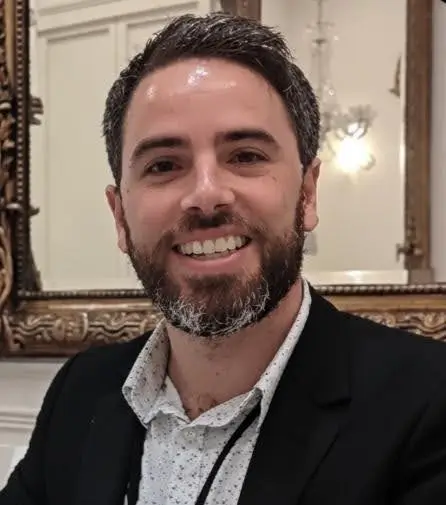
Dr. Víctor Quesada Cubo
Member, Scientific Advisory Board
Dr. Víctor Quesada Cubo, MD, MPH, MBA, MHHA is a physician, epidemiologist, and international public health specialist with extensive experience in multilateral health cooperation, health systems strengthening, and global health program management across Latin America, the Caribbean, and humanitarian settings. His work integrates technical public health expertise with strategic project leadership, advising ministries of health, multilateral agencies, and international NGOs on evidence-based policy development, epidemiological surveillance, and pandemic preparedness.
He is currently based in Ecuador, where he serves as a project coordinator leading international cooperation initiatives on digital transformation and interoperability in the health sector. In addition, he is the coordinator of the Neglected Tropical Diseases (NTD) working group of the Spanish Society of Tropical Medicine and International Health (SEMTSI), contributing to advancing technical dialogue and strategic action in this field.
Dr. Quesada has designed and managed health initiatives in Spain, Argentina, Honduras, Bolivia, Mexico, Venezuela, and the Sahrawi refugee camps in Algeria. He has provided technical assistance to organizations including the Pan American Health Organization/WHO, the Spanish Agency for International Development Cooperation (AECID), Doctors of the World, and the German Cooperation Agency (GIZ). His portfolio includes supervising donor-funded programs supported by USAID, ECHO, AECID, GAC, and GIZ, ensuring rigorous planning, budgeting, monitoring, and reporting aligned with international standards.
His recent work includes leading the development of the Ibero-American Epidemiological Observatory, coordinating Bolivia’s first Genomic Surveillance Network, and supporting national COVID-19 response strategies, digital health expansion, and institutional capacity-building efforts. He has also contributed to the design of bioethics frameworks, migrant health strategies, and large-scale public health interventions in resource-limited settings.
Dr. Quesada holds an MD, an MPH, an MBA in Healthcare Management, and a Master’s in Humanitarian Health Action, along with a medical specialty in Preventive Medicine and Public Health. He is committed to translating field experience and scientific evidence into practical tools and policies that strengthen health systems and improve outcomes for vulnerable populations.

Dr. Nils Pilotte
Member, Scientific Advisory Board
Dr. Nils Pilotte, PhD is an Assistant Professor of Biology at Quinnipiac University in Hamden, Connecticut. He earned his PhD in Molecular and Cellular Biology from the University of Massachusetts Amherst, where he developed a strong foundation in molecular parasitology and diagnostic innovation. His research focuses on applying molecular tools to the study of parasites responsible for neglected tropical diseases (NTDs), with particular interest in improving diagnostic strategies and elucidating the roles of repetitive DNA sequences in parasitic organisms.
Dr. Pilotte’s additional research interests include advancing our understanding of host–vector relationships and developing novel approaches to vector-based disease surveillance. He has contributed extensively to NTD-related operational research and programmatic efforts, and assays he has led the development of are now used by collaborating laboratories worldwide for the screening of human, vector, and environmental samples. Notably, his diagnostic assays were selected as the discriminators of infection for the DeWorm3 cluster-randomized trials, the largest operational research study ever conducted on human-infecting soil-transmitted helminths.
In addition to his research portfolio, Dr. Pilotte serves on the Onchocerciasis Sub-group of the World Health Organization’s Diagnostic Technical Advisory Group (DTAG) for NTDs and works as a consultant for the Carter Center’s onchocerciasis elimination initiatives. His teaching interests include genetics, molecular genetics, and molecular parasitology, and he is deeply committed to expanding scientific literacy. He frequently delivers community lectures on topics of scientific relevance, particularly for local retiree and lifelong-learning audiences.

Dr. Samina Somji
Member, Scientific Advisory Board
Dr. Samina Somji, MD, MMED, MSC is an Assistant Professor and Director of Postgraduate Medical Education at the Aga Khan University Medical College, East Africa. She also serves as an Infectious Diseases Specialist and Internal Medicine Consultant at the Aga Khan Hospital in Dar es Salaam, Tanzania. Previously, she spent six years as Internal Medicine Residency Program Director, where she played a central role in curriculum development, examination oversight, and resident supervision and mentorship.
Dr. Somji holds a Master of Science in Infectious Diseases from the London School of Hygiene and Tropical Medicine. She has served as Chair of Infection Prevention and Control at Aga Khan Hospital for nearly nine years and is an active member of the Antimicrobial Stewardship Committee, where she contributes to institutional strategies promoting rational antimicrobial use and combating antimicrobial resistance.
During the COVID-19 pandemic, Dr. Somji served as a frontline primary physician and was instrumental in developing and implementing the hospital’s COVID-19 management protocols during the surge period. In recognition of her leadership and effective management of the increased patient load, she received a distinction award from the Senior Leadership Team.
Dr. Somji is a member of the Infectious Diseases Society of America (IDSA) and has published peer-reviewed research primarily in infectious diseases, with interests spanning pneumonia, multidrug-resistant organisms, tuberculosis, and HIV. She remains deeply engaged in clinical care, teaching, and research, with a strong commitment to improving infectious disease outcomes in East Africa and strengthening antimicrobial stewardship programs in Tanzania and the broader region.